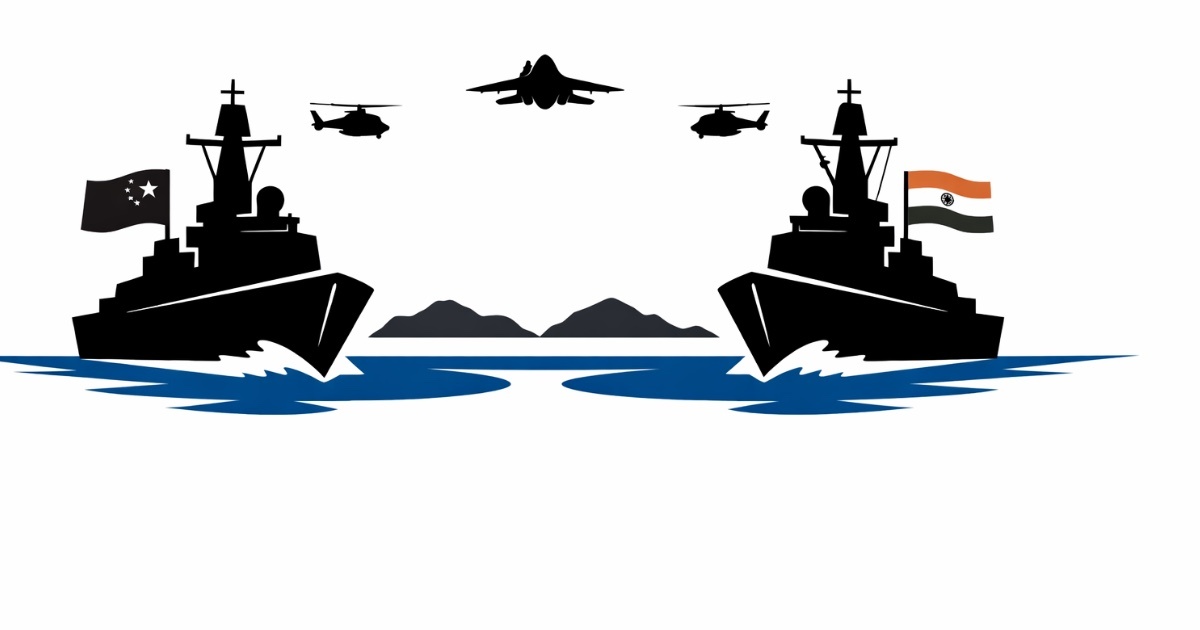
International Fleet Review 2026: China-India Naval Signals Send Strong Strategic Message in Indian Ocean
International Fleet Review China-India Naval Signals Send Strong Strategic Message in Indian Ocean The International Fleet Review (IFR) 2026 has emerged as more than a ceremonial naval event. It has become a key moment in maritime diplomacy, especially with visible engagement between the navies of India and China.
At a time when regional tensions and competition in the Indian Ocean Region (IOR) remain high, even symbolic naval gestures carry deep meaning. Military observers, strategic analysts, and policymakers are closely studying the signals sent during this global gathering of warships.
The presence of both Indian and Chinese naval vessels at the same international platform highlights a complex mix of competition, caution, and controlled engagement.
For India, maritime security is central to national strategy. For China, sea routes are critical to trade and energy supply. That is why the naval engagement at IFR 2026 matters today.
What Is the International Fleet Review 2026?
The International Fleet Review 2026 is a large-scale naval event that brings together warships from multiple countries. It is designed to promote:
- Maritime cooperation
- Confidence-building measures
- Naval diplomacy
- Humanitarian coordination
India has hosted fleet reviews in the past to showcase naval strength and strategic partnerships. The event typically includes:
- Naval parades
- Bilateral interactions
- Professional exchanges
- Cultural diplomacy
Such reviews are not combat exercises. They are diplomatic platforms conducted in a formal setting.
India’s Maritime Vision in the Indian Ocean
India views the Ocean as a strategic lifeline. Nearly 90% of trade by volume moves through sea routes. Protecting these waters is critical.
New Delhi has long promoted the concept of SAGAR (Security and Growth for All in the Region). This approach stresses cooperation, stability, and inclusive growth.
The Navy has expanded its presence across the Ocean. It has strengthened ties with Southeast Asian nations, African coastal states, and Indo-Pacific partners.
At IFR 2026, India’s message was clear:
India supports a free, open, and rules-based maritime order.
China’s Growing Naval Footprint
Over the past decade, the People’s Liberation Army Navy (PLAN) has significantly expanded its operations in the Indian Ocean.
China’s interests include:
- Protecting energy shipments
- Securing trade routes
- Supporting overseas investments
- Expanding maritime influence
Chinese naval ships have regularly visited ports in South Asia and Africa. Beijing also operates overseas facilities that support long-distance deployments.
Because of this expanding footprint, any interaction between the Indian Navy and the PLAN attracts global attention.
Key Signals from China-India Naval Engagement at IFR 2026
1. Controlled Diplomacy Despite Strategic Competition
The presence of both navies at the same platform shows that military communication channels remain open.
Even when land tensions exist, maritime engagement can help avoid misunderstandings at sea.
2. Professional Military Courtesy
Naval fleet reviews follow strict protocol. Ships participate in parades, formal visits, and receptions. Such interactions are part of global naval culture.
Professional conduct reduces risk during unplanned encounters in busy waters.
3. Strategic Messaging to the Indo-Pacific
The optics of both navies operating in the same maritime space without incident send a message of stability.
For smaller Indian Ocean nations, this is reassuring. Many countries prefer balance rather than confrontation.
4. Maritime Stability as Shared Interest
Despite rivalry, both countries depend heavily on sea trade. Disruption in the Indian Ocean would hurt both economies.
That shared dependence encourages caution.
Indian Ocean: A High-Stakes Maritime Arena
The Ocean handles a large portion of global energy flows. Key shipping lanes connect:
- The Middle East
- Africa
- South Asia
- Southeast Asia
coastline stretches over 7,500 km. The country has major ports handling growing trade volumes.
China, meanwhile, relies on Indian Ocean sea lanes for energy imports. Stability in this region affects global markets.
This is why naval engagement, even symbolic, carries weight.
India’s Strategic Takeaways from IFR 2026
Strengthening Regional Leadership
By hosting or actively shaping such platforms, reinforces its role as a responsible maritime power.
Fleet reviews project confidence and operational capability without aggression.
Balancing Engagement and Vigilance
India continues to expand maritime partnerships with countries in the Indo-Pacific. At the same time, it keeps communication open with China.
This balanced approach reduces risk while protecting national interests.
Boosting Naval Modernisation Narrative
Public naval events highlight fleet strength, new capabilities, and operational readiness. They also support India’s push for indigenous shipbuilding and defence manufacturing.
China’s Strategic Messaging
China’s participation also signals that it seeks visibility in major maritime gatherings.
By attending international fleet reviews, Beijing shows:
- Acceptance of multilateral engagement
- Desire to avoid isolation
- Continued interest in Indian Ocean presence
However, participation does not erase competition. Both countries continue to build naval assets.
Impact on India-China Relations
Relations between the two countries remain complex. There are unresolved border issues and economic competition.
But maritime engagement offers a different space for dialogue.
Sea-based diplomacy often moves separately from land disputes. Naval professionalism can prevent accidental escalation.
IFR 2026 demonstrates that both sides are willing to maintain minimum engagement standards at sea.
Implications for Smaller Indian Ocean Nations
Many island and coastal states in the Ocean depend on both
They seek:
- Investment
- Infrastructure support
- Maritime security cooperation
For these nations, stable relations reduce pressure.
Fleet reviews help create a neutral platform where multiple powers can participate without confrontation.
Global Context: Indo-Pacific Strategy
The broader Indo-Pacific remains a zone of strategic competition.
Major powers focus on:
- Freedom of navigation
- Supply chain security
- Naval access
- Defence partnerships
India has strengthened its maritime ties with countries across the region.
China continues expanding blue-water capabilities.
IFR 2026 sits within this larger geopolitical context.
Why Maritime Diplomacy Matters More in 2026
Global trade disruptions in recent years have shown how vulnerable sea routes can be.
Conflicts, piracy, and shipping delays impact prices worldwide.
Maritime diplomacy reduces the risk of accidental confrontation.
Fleet reviews build transparency.
They also provide opportunities for informal military dialogue.
In an era of growing naval deployments, such platforms are critical.
Expert View: Symbolism vs Strategy
While fleet reviews are ceremonial, they carry strategic weight.
Naval experts often study:
- Ship composition
- Deployment patterns
- Bilateral meetings
- Body language during interactions
Symbolism shapes perception. Perception shapes strategy.
Indian government calm, confident participation reflects long-term maritime planning.
China’s presence reflects continued interest in Indian Ocean influence.
What to Watch Next
After IFR 2026, observers will track:
- Frequency of naval deployments
- Port visits in South Asia
- Joint exercises with other partners
- Maritime infrastructure developments
If communication channels remain open, risk of escalation reduces.
If deployments increase without dialogue, tensions may rise.
A Carefully Managed Maritime Message
The International Fleet Review 2026 has shown that even rival powers can share the same waters under structured protocol.
The engagement between the Navy and the People’s Liberation Army Navy does not signal friendship. It signals caution.
For India, the event reinforces its role as a stable maritime power in the Indian Ocean.
For China, participation reflects continued strategic interest.
For the region, the key takeaway is this:
Maritime diplomacy remains one of the few spaces where competition and communication coexist.
In a high-stakes Indo-Pacific environment, that balance is crucial.
As 2026 unfolds, the Ocean will remain central to global strategy. And every naval signal, no matter how subtle, will continue to shape the region’s future.
Edited by: Pushkarini Annabathula
Also Read : TECH LAYOFF TRENDS & AI FORECASTS 2026: CRITICAL HIRING SHIFTS, AUTOMATION IMPACT AND WHAT WORKERS MUST PREPARE FOR
Add republicpost.in as preferred source on google – Click Here
Last Updated on: Wednesday, February 25, 2026 4:27 pm by Republic Post Team | Published by: Republic Post Team on Wednesday, February 25, 2026 4:27 pm | News Categories: News
About The Author